Introduction
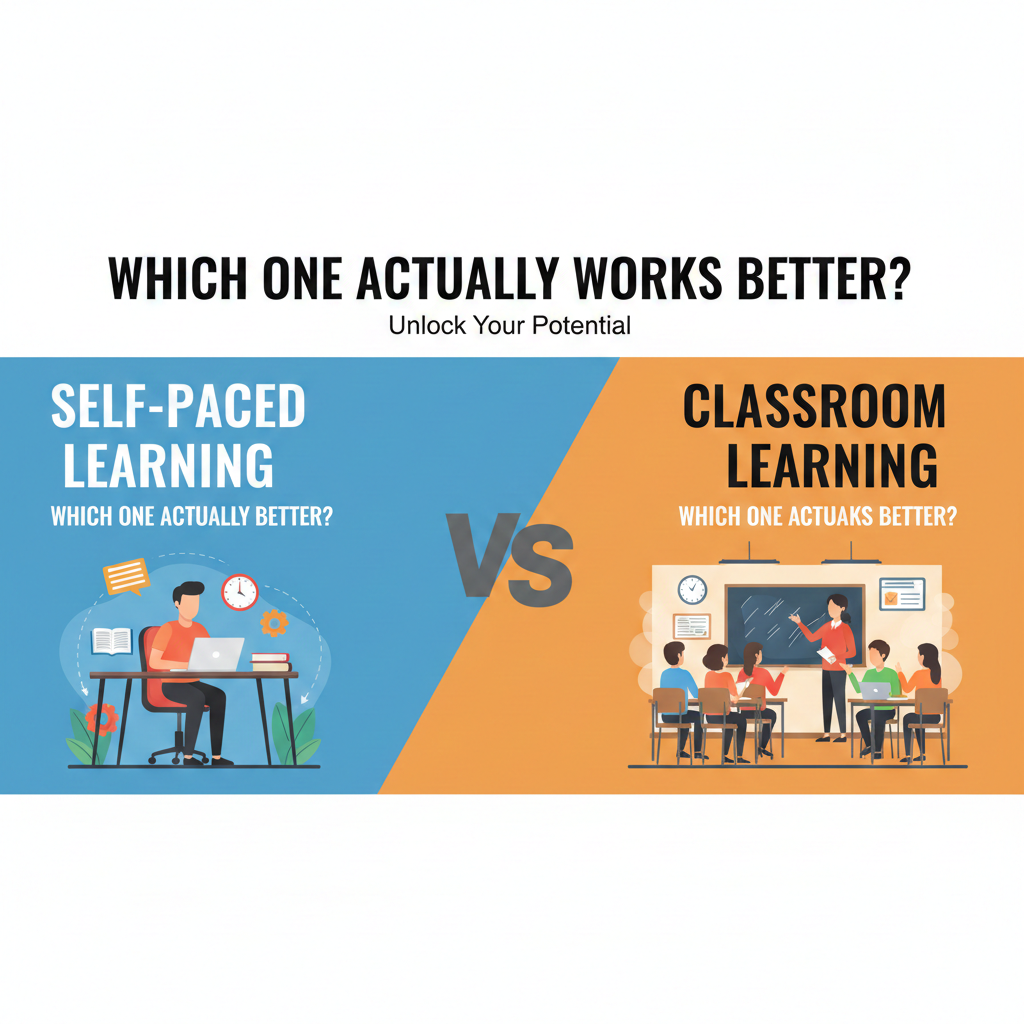
Self-paced learning works best for disciplined learners who need flexibility, while classroom learning works better for those who benefit from structure, deadlines, and live interaction—the better option depends on learning behavior, not intelligence.
As online education grows, many people struggle to choose between self-paced courses and traditional classroom learning. Advice online often frames this as “modern vs outdated,” which misses the real issue. From real learning and career outcomes, neither method is superior by default. The effectiveness depends on how well the learning format matches your habits, accountability needs, and career stage. This article breaks down self-paced learning vs classroom education realistically—without bias, hype, or nostalgia.
What Self-Paced Learning Actually Offers
Self-paced learning allows learners to control:
When they study
How fast they progress
Which topics they revisit
It is ideal for people who:
Balance work or family
Learn independently
Prefer revisiting material multiple times
However, flexibility comes with responsibility.
[Expert Warning]
Self-paced learning fails most often due to inconsistency—not difficulty.
What Classroom Learning Actually Provides
Classroom learning emphasizes:
Fixed schedules
Instructor guidance
Peer interaction
External accountability
It benefits learners who:
Need deadlines to stay consistent
Learn through discussion
Value immediate feedback
Classroom learning doesn’t guarantee understanding—but it enforces participation.
Core Differences Between Self-Paced and Classroom Learning
| Factor | Self-Paced Learning | Classroom Learning |
| Schedule | Flexible | Fixed |
| Accountability | Self-driven | External |
| Feedback | Limited | Immediate |
| Cost | Often lower | Often higher |
| Pace control | Full control | Instructor-led |
| Dropout risk | Higher | Lower |
Common Mistakes Learners Make
Mistake 1: Choosing Flexibility Without Discipline
Fix: Use self-paced learning only if you can self-schedule reliably.
Mistake 2: Assuming Classroom Equals Quality
Fix: Evaluate instructor skill and curriculum depth.
Mistake 3: Ignoring Learning Style
Fix: Choose the format that matches how you stay consistent.
[Pro-Tip]
The best learning format is the one you’ll actually complete.
Information Gain: Completion Rates Matter More Than Format
Most SERP articles compare teaching styles or technology.
What they miss:
Completion rate predicts learning outcomes
Many self-paced learners quit silently
Classroom learners progress due to social pressure
Contrarian insight:
A “worse” format that you finish beats a “better” format you abandon. This completion-based reality is rarely emphasized in top-ranking content.
Beginner Mistake Most People Make
Beginners often choose self-paced learning because it feels safer and less demanding. From real learning outcomes, this often backfires. Without routines or accountability, beginners delay practice and lose momentum. For many beginners, structure—not freedom—is what creates confidence.
Practical Table: Which Learning Style Fits You?
| Question | Self-Paced | Classroom |
| Need schedule flexibility | ✔ | ✖ |
| Struggle with consistency | ✖ | ✔ |
| Learn through discussion | ✖ | ✔ |
| Prefer control over pace | ✔ | ✖ |
Choose the column with the most checkmarks.
How Employers View These Learning Formats
Employers rarely care how you learned. They care:
What you can do
How clearly you explain it
Whether you apply knowledge
Both formats are acceptable when outcomes are strong.
If certificates are involved, credibility matters.
Internal Link (contextual): learning credibility → Online Course Credibility
FAQs
Is self-paced learning better than classroom learning?
It depends on discipline and learning habits.
Do employers prefer classroom education?
They prefer strong skills, not learning formats.
Is self-paced learning good for beginners?
Sometimes—but many beginners benefit more from structure.
Is classroom learning outdated?
No. It still works well for many learners.
Can I combine both learning styles?
Yes—hybrid approaches often work best.
Conclusion
Self-paced learning vs classroom education is not a competition—it’s a compatibility question. From real learning and career outcomes, success comes from choosing the format that keeps you consistent, engaged, and applying skills. If flexibility helps you learn, self-paced works. If structure keeps you moving, classrooms win. The right choice is the one you’ll finish—and use.
Internal link:
Online Courses With Certificates: What They Really 2026
External link:
Online Learning vs. Classroom Learning Research